
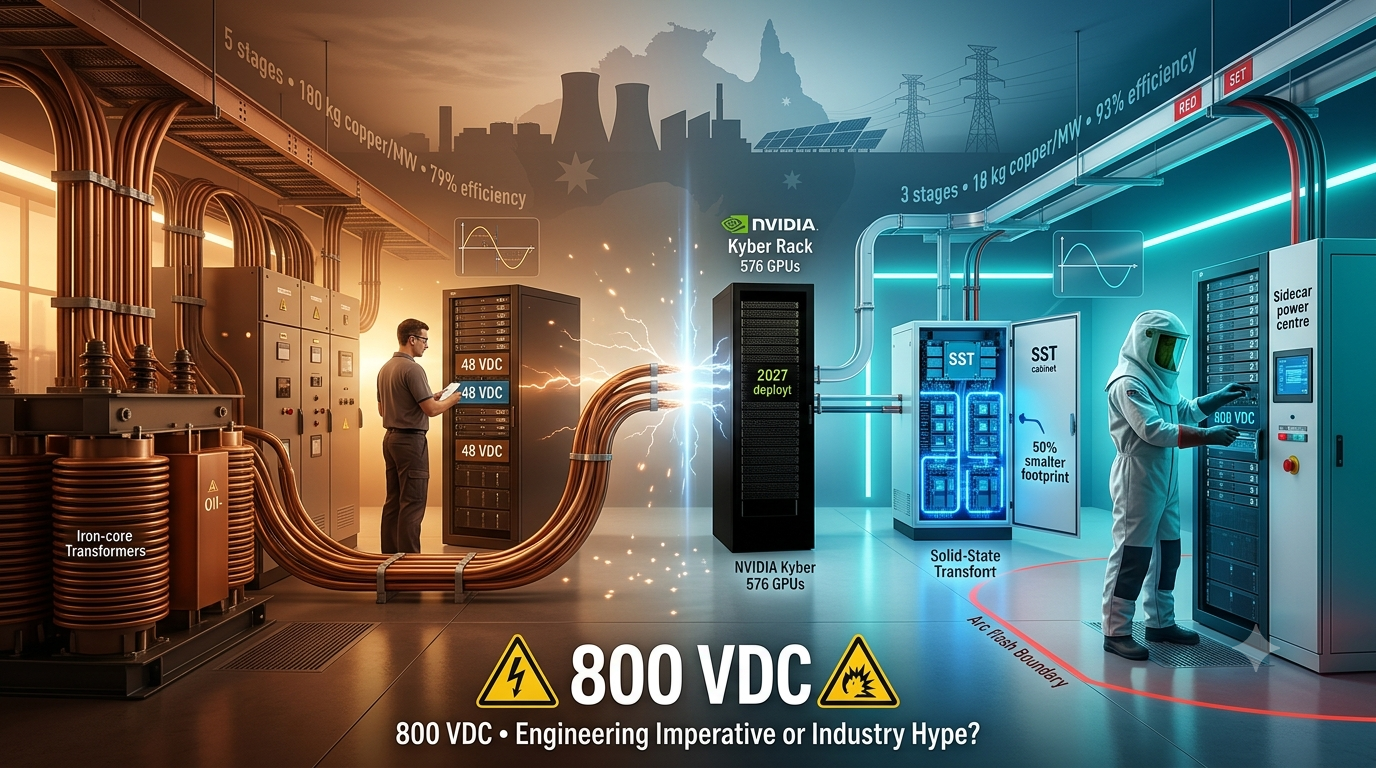
800 VDC in the AI Data Centre: Engineering Imperative or Industry Hype?
Part 3: Deep Technical Dive - DC Fault Protection, Reliability, and Generator Integration
This three-part blog examines the case for 800 VDC distribution in AI data centres. Part 3 delivers the deep technical dive.
800 VDC in the AI Data Centre: Engineering Imperative or Industry Hype?
Part 2: Enabling Technologies and Equipment Ecosystem
This three-part blog examines the case for 800 VDC distribution in AI data centres. Part 2 explores enabling technologies.
800 VDC in the AI Data Centre: Engineering Imperative or Industry Hype?
Part 1: The Density Imperative and Architectural Shift
This three-part blog examines the case for 800 VDC distribution in AI data centres. Part 1 establishes the density crisis.
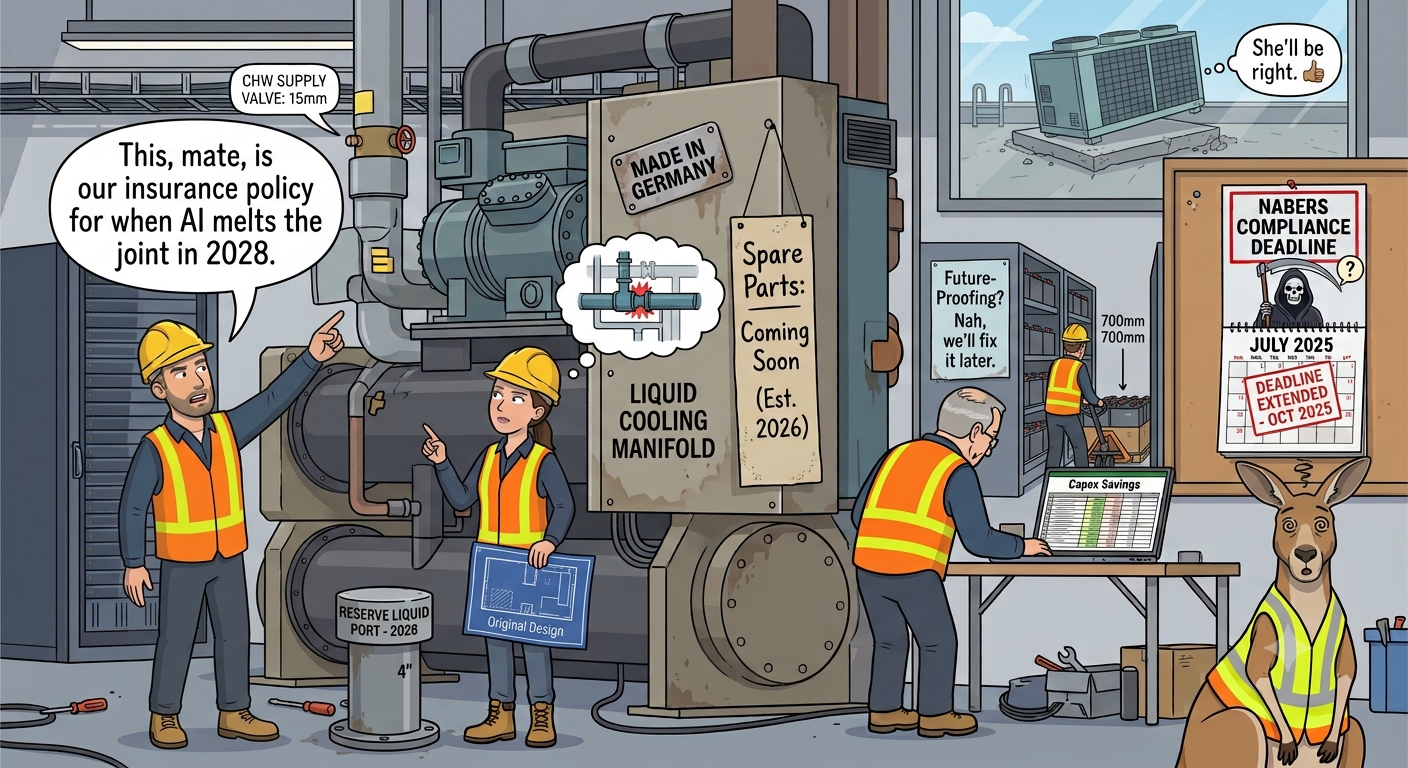
Data Centre Engineering
Part 2: Physical Layout, Thermal Futures, and Lifecycle Obsolescence
A typical construction project builds a static shell for a known purpose—but a data centre is a dynamic, living machine for an unknown future, where a 20MW IT load can double overnight, Opex eclipses Capex within years, and retrofitting is open-heart surgery on a patient that cannot be switched off. This two-part series, written from the perspective of engineers who have also managed these facilities, navigates the full lifecycle reality. Part 2 turns to the physical layer: the brutal 2N efficiency tax, maintenance-access design, stubbing out for liquid cooling, DCIM granularity, and planning for the 10-year obsolescence cliff. Because a facility that looks perfect on a PDF but costs a fortune to run - or forces your team into risky manual workarounds - isn't a success.
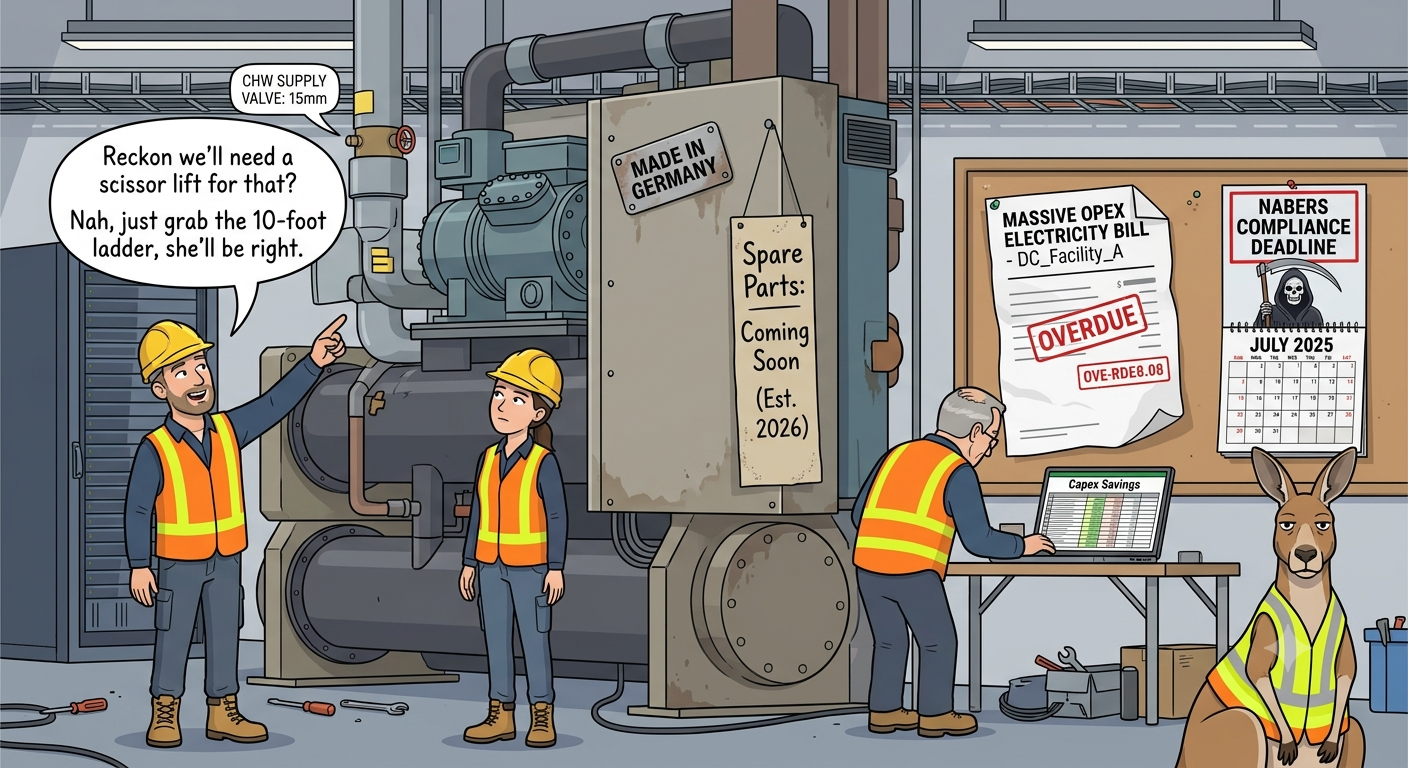
Data Centre Engineering
Part 1: Financial, Human, and Supply Chain Realities
A typical construction project builds a static shell for a known purpose—but a data centre is a dynamic, living machine for an unknown future, where a 20MW IT load can double overnight, Opex eclipses Capex within years, and retrofitting is open-heart surgery on a patient that cannot be switched off. This two-part series, written from the perspective of engineers who have also managed these facilities, navigates the full lifecycle reality. Part 1 tackles the financial and human equation - the part-load efficiency trap, the counter-intuitive operational danger of Tier III, staffing costs, and the supply-chain risks of imported gear.
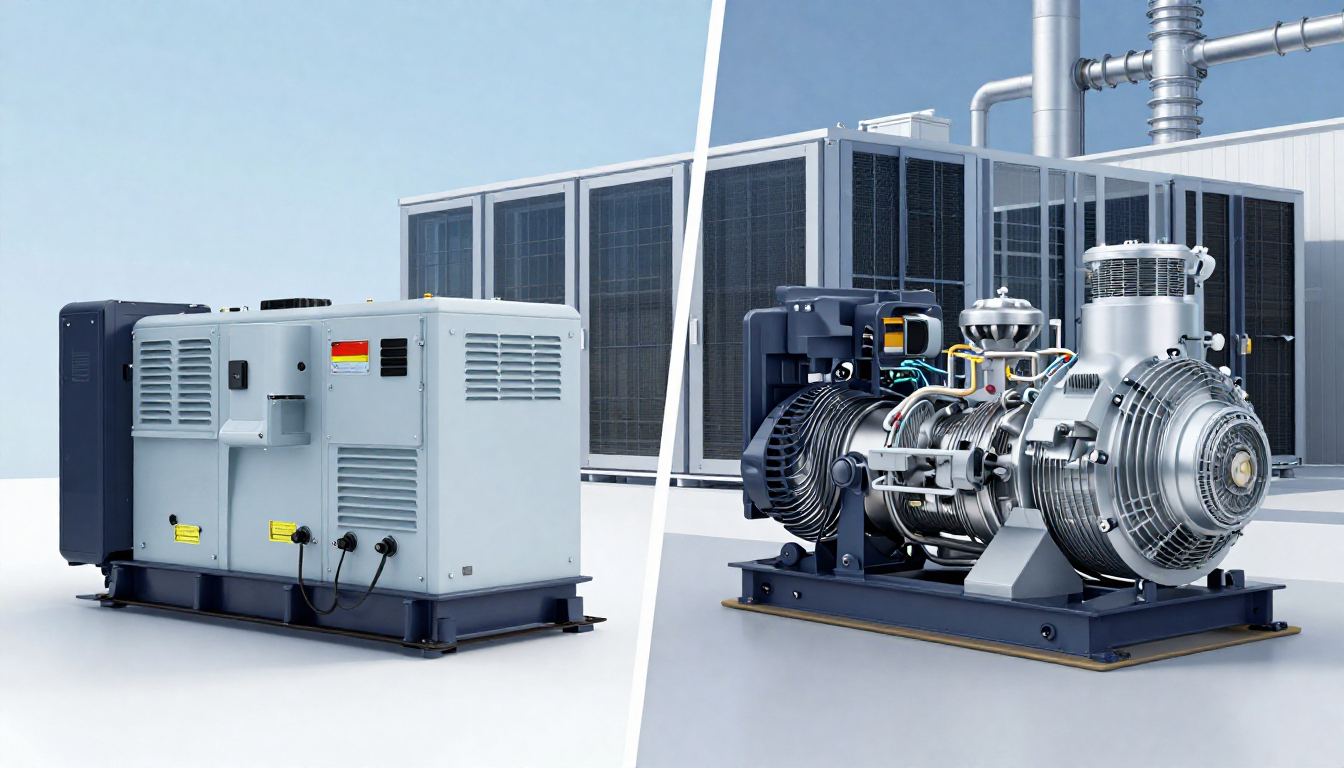
Gas Turbine vs. Diesel Generator for Australian Data Centres: A Technical Analysis
The choice between diesel generators and gas turbines for Australian data centres is a decision with significant financial and operational consequences. Diesel delivers proven reliability, rapid start-up, and a mature local service ecosystem at a lower initial cost. Gas turbines offer lower fuel costs, reduced emissions, and cooling integration but demand higher capital investment, longer lead times, and specialised maintenance capabilities. As AI workloads and sustainability targets reshape the industry, understanding this trade-off in technical depth has never been more critical.
Operations & Management Strategy: Keeping AI Facilities Reliable, Safe, and Efficient
Uptime Institute’s AI Infrastructure Advisory
Part 5: Operations & Management Strategy
A GPU can burn out in 30 seconds if coolant flow stops – that is the reality of operating an AI data center. Uptime Institute’s Part 5 covers staffing (experienced leaders are non‑negotiable), clear demarcation between IT and facilities for liquid cooling, safety in high‑current and medium‑voltage environments, shorter GPU lifecycles (three years vs. ten for CPUs), and the SOP/MOP/EOP documentation needed to run safely and reliably. Operations is not an afterthought - it is where value is made or lost.
Level 4 & 5 Commissioning: Testing AI Facilities for Real-World Workloads
Uptime Institute’s AI Infrastructure Advisory
Part 4: Level 4 & 5 Commissioning
Standard load banks are just heaters – they cannot simulate the volatile power draw and heat output of real GPU workloads. In Part 4, Uptime Institute explains why AI facilities require specialised load banks, DLC‑specific fluid cleanliness and pressure testing, continuous cooling validation, and third‑party witnessed Level 5 integrated system testing. Commissioning is not complete until your facility can survive sub‑second cooling failures.
Construction Oversight & Validation: Preventing Design‑to‑Build Drift in AI Facilities
Uptime Institute’s AI Infrastructure Advisory
Part 3: Construction Oversight & Validation
Fast AI builds are prone to design‑to‑build drift – small deviations that become costly remediation if caught late. Uptime Institute’s Part 3 details the physical demands of AI facilities: floor loading >2,000 kg per rack, multi‑story low‑latency designs, hybrid liquid/air cooling installation, and phased construction. Learn why independent milestone inspections are essential to protect your investment and schedule.
Technical Vendor Requirements & Evaluation: Selecting Cooling and Power Systems for AI
Uptime Institute’s AI Infrastructure Advisory
Part 2: Technical Vendor Requirements & Evaluation
Choosing the wrong cooling or power technology can lock you into obsolete infrastructure for years. In Part 2, Uptime Institute compares direct‑to‑chip (DLC) vs. immersion cooling, explains why GPU power fluctuations demand high‑di/dt UPS systems, and provides a structured vendor evaluation framework – including RFP templates, weighted criteria, and the importance of delivery penalties. Maintain owner control while benefiting from independent, vendor‑neutral guidance.
Design Development & Review: Technical Considerations for High-Density AI Facilities
Uptime Institute’s AI Infrastructure Advisory
Part 1: Design Development & Review
Conventional data centers run at 5–15 kW per rack; AI training clusters routinely hit 40–130 kW. According to Uptime Institute, this density forces a complete rethink of cooling, power, and physical space. Part 1 covers direct liquid cooling (DLC), continuous cooling requirements, two reference resiliency topologies (concurrently maintainable and fault tolerant), and the structural must‑haves – from 2,000+ kg racks to taller ceilings and expanded gray space.
From Design to Operations: A Complete Guide to AI Data Centre Infrastructure
Uptime Institute’s Guide to AI Data Center Infrastructure – A Five‑Stage Framework
AI data centers are not scaled‑up traditional facilities. Based on Uptime Institute’s five‑part advisory series, this condensed guide walks you through the entire infrastructure lifecycle: design, vendor selection, construction, commissioning, and operations. Learn why rack densities of 130 kW demand direct liquid cooling, why continuous cooling is non‑negotiable, and how to prevent design‑to‑build drift before it costs millions.
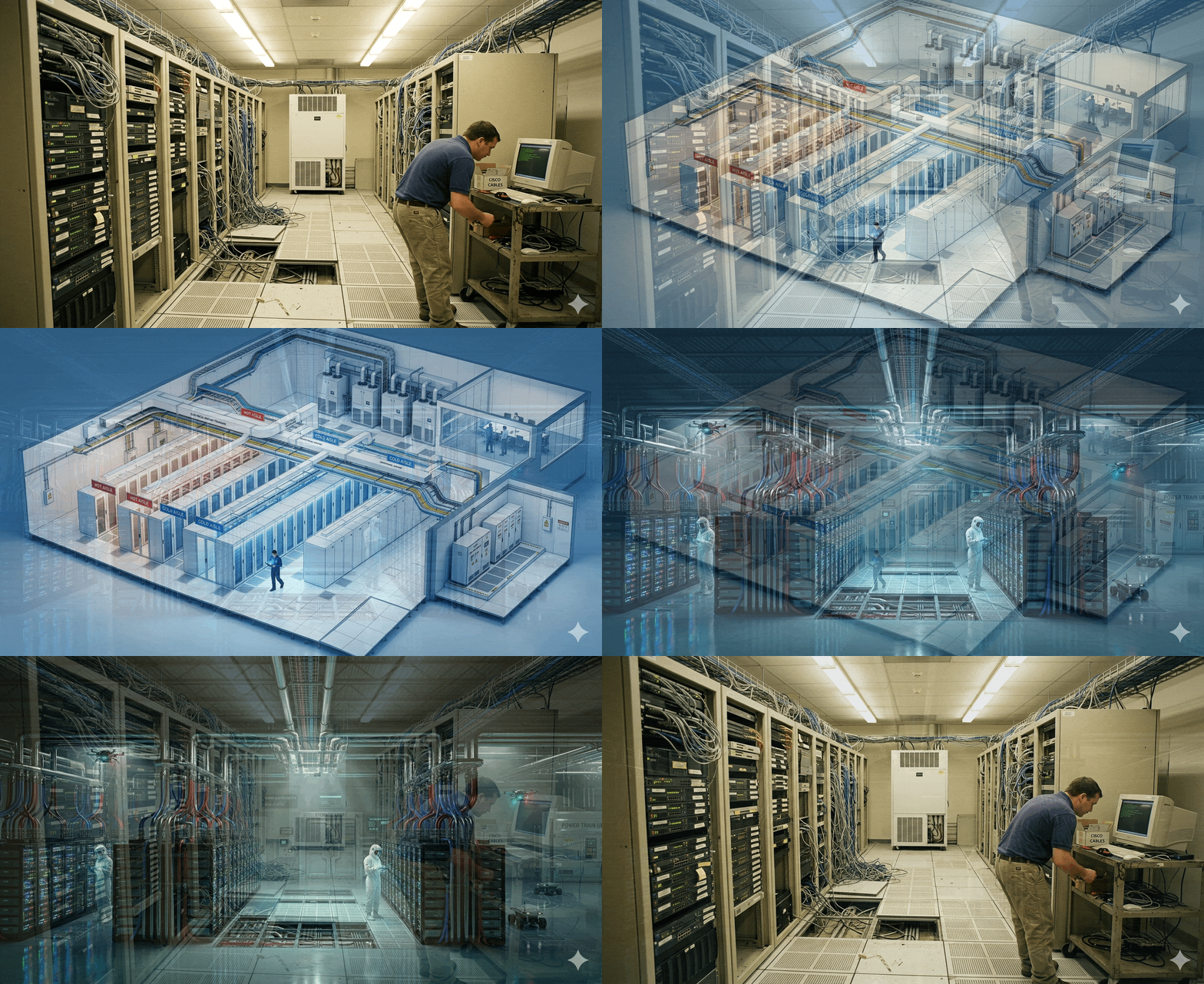
From Air to Liquid Fire: Building the AI Factory - Why Old-School Data Centres Just Lost Their Cool
Building an AI factory is nothing like a traditional cloud data centre. Cloud racks run at 10-20kW; AI racks scream past 120kW. That changes everything - power, cooling, and especially the build process.
Forget stick-built construction. AI factories demand prefabricated Power Train Units (PTUs) - factory-assembled electrical vaults craned into place and operational in days, not months. Liquid cooling replaces air, forcing vendor lock-in and component-level compatibility testing.
On certification: pursue Tier III for concurrent maintainability (service without shutdown), but accept N+1 cooling rather than 2N fault tolerance. Pure Tier IV doubles your piping and leak points for marginal gain.
Post-build, operations shift from IT to industrial engineering. Methods of Procedure (MOPs) govern every valve turn. Programmed maintenance runs every 2-3 weeks. Your technicians now need fluid dynamics literacy.
The verdict? The cloud was built on air. The AI factory runs on liquid, modular steel, and surgical precision. Build accordingly.
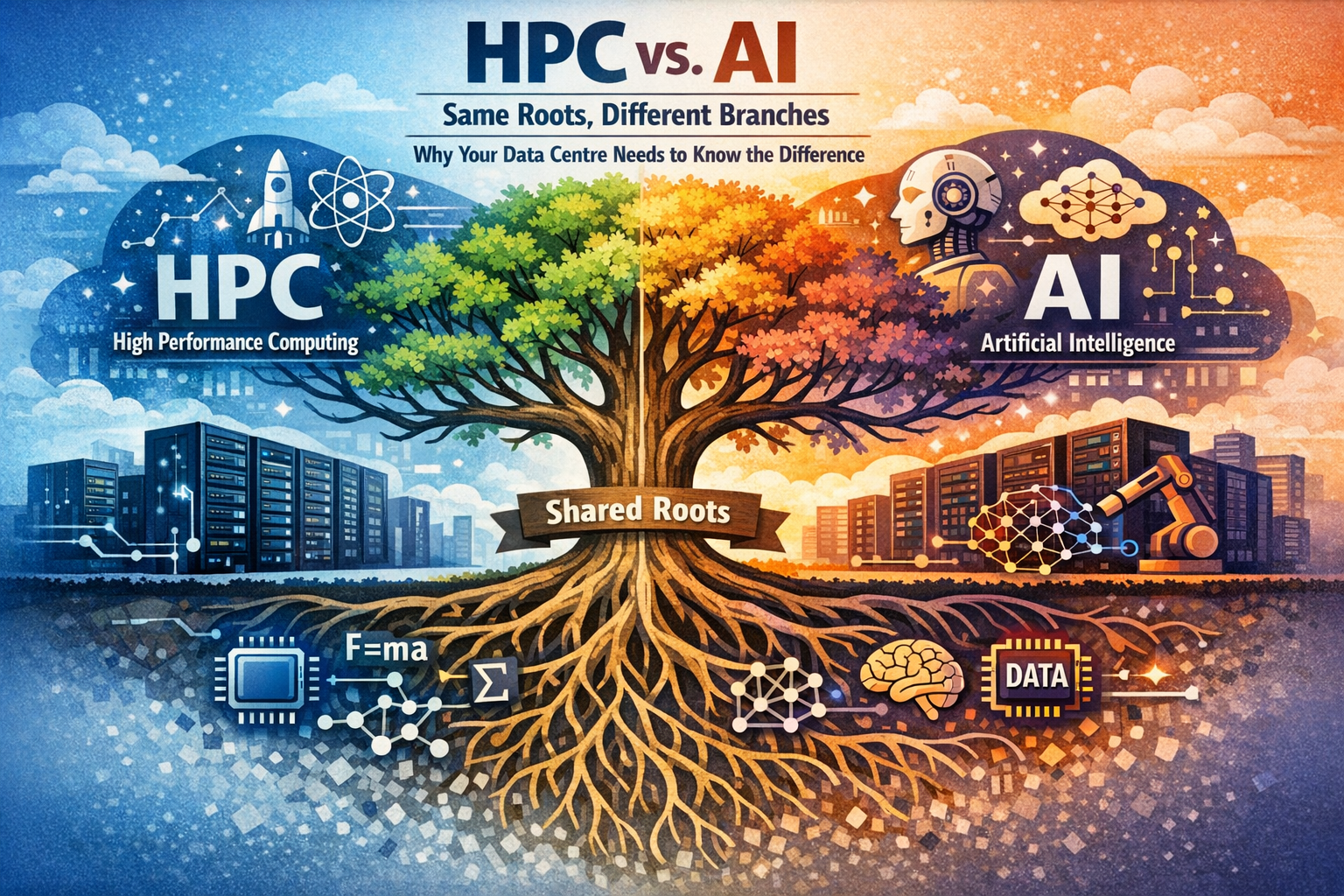
HPC vs. AI: Same Roots, Different Branches (And Why Your Data Centre Needs to Know the Difference)
HPC and AI both love parallel processing and GPUs, but that’s where the family resemblance ends. HPC runs steady, precise simulations on air‑cooled racks with low‑latency networks. AI training spikes power to 150 kW per rack, needs liquid cooling, and demands massive bandwidth. AI inference? That’s bursty, auto‑scaling, and lives on cheaper hardware.
Beyond Uptime: Engineering Resilience for the Long Haul
Apply the conditions that equipment will face in real-world scenarios for longevity and resilience to minimize weaknesses of products, services, and applications that can lead to premature failures.