
Gas Turbine vs. Diesel Generator for Australian Data Centres: A Technical Analysis
Introduction
The selection of backup or prime power generation for data centres is a strategic decision with profound implications for capital expenditure, operational reliability, and long-term sustainability. In the Australian context, this decision is further complicated by unique grid conditions, regulatory requirements, and a distinct vendor landscape.
This blog provides a comprehensive technical comparison of gas turbines and diesel generators across design, implementation, and operational dimensions, with specific consideration of Total Cost of Ownership (TCO), Tier III/IV certification requirements, and vendor penetration in the Australian market.
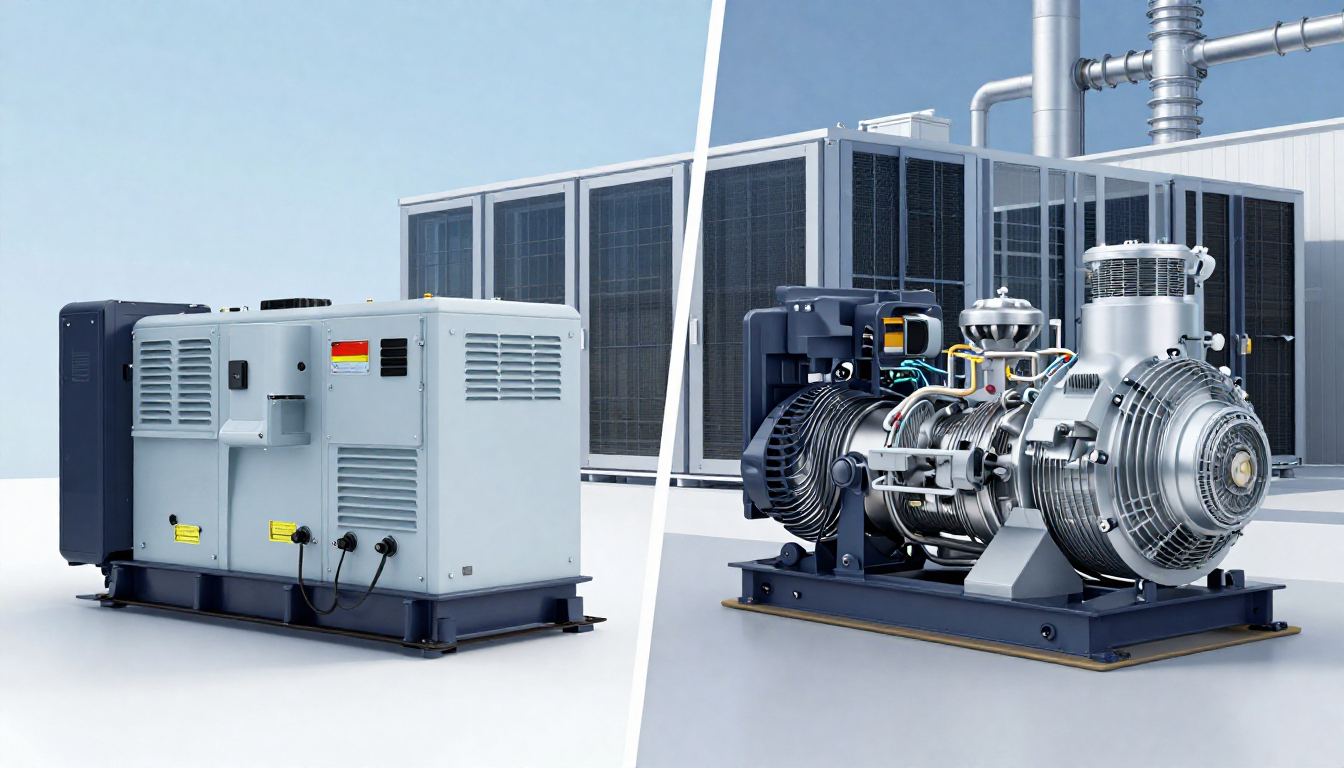
Quick Technology Snapshot
| Characteristic | Diesel Generator | Gas Turbine |
|---|---|---|
| Fuel | On-site diesel storage | Pipeline natural gas |
| Start-up Time | < 10 seconds | 30 - 120 seconds |
| Power Density | High | Moderate |
| Emissions | Higher (NOx, particulates) | Lower |
| CapEx | Lower ($300-$600/kW) | Higher ($500-$1,000/kW) |
| OpEx | Higher fuel logistics | Lower fuel costs, higher maintenance |
| Lead Time | 6 - 9 months | 12 - 24 months |
Design Considerations
Power Density and Spatial Requirements
Diesel generators offer superior power density, delivering more kilowatts per square metre of floor space. This is a critical advantage in Australian capital cities where data centre land is exceptionally expensive. The physical footprint of a diesel installation, however, must include substantial space for fuel storage tanks, bunding, and fire protection systems compliant with AS/NZS 1940.
Gas turbines require a larger engine room for the same power output, but they eliminate the need for on-site fuel storage. This trade-off can be advantageous for sites where land is available but fuel delivery logistics are challenging.
Start-up Time and UPS Integration
This is one of the most critical differentiators for Tier III and IV facilities.
Diesel generators are capable of starting and accepting a full block load in under ten seconds, directly supporting the NFPA 110 requirement for standby power. This rapid response minimises the required UPS capacity to bridge the gap between utility failure and generator online status.
Gas turbines typically require between 30 and 120 seconds to start, purge, accelerate, and synchronise before accepting load. This significantly slower response necessitates a substantially larger and more costly UPS/battery system to maintain continuous power during the start-up sequence.
Cooling Integration
Gas turbines generate high-temperature exhaust that can be directed to absorption chillers, providing cost-effective or "free" cooling for the data centre. This can materially improve the facility's Power Usage Effectiveness (PUE), a valuable outcome in Australia's hot climate where cooling represents a major operational expense.
Diesel generators do not offer this heat recovery capability, representing a missed opportunity for operational efficiency.
Fuel Supply Risk and Autonomy
For Tier III and IV facilities, the concept of a single point of failure is paramount.
Diesel generators are entirely self-contained. The fuel is stored on-site, and the system is independent of external utilities. In the event of a natural disaster, grid failure, or pipeline interruption, the diesel plant continues to operate for as long as fuel remains available.
Gas turbines are entirely dependent on the integrity of the external gas pipeline. A pipeline failure, pressure drop, or supply interruption immediately compromises the generator's ability to operate. This external dependency is often considered an unacceptable risk for critical Tier III/IV facilities.
Total Cost of Ownership (TCO) Analysis
Capital Expenditure
Diesel generators have a substantially lower initial cost. For a 1-10 MW system, diesel sets typically range from $300 to $600 per kW, while gas turbines range from $500 to $1,000 per kW. For a 5 MW installation, this translates to approximately $1.5 million to $3 million for diesel versus $5 million to $10 million for gas turbines.
This cost differential is amplified by the extended lead times for gas turbines, which now stretch to 12 to 24 months compared to 6 to 9 months for diesel sets. Extended delivery windows increase financing costs and delay revenue generation, materially affecting the project's overall financial viability.
Operational Expenditure
Natural gas is generally cheaper and more price-stable than diesel, giving gas turbines a fuel cost advantage. However, this is offset by higher maintenance costs.
Diesel generators require more frequent maintenance, including regular oil and filter changes, but each event is relatively low-cost. Gas turbines have less frequent maintenance intervals, but each major event is significantly more expensive. A full set of turbine blade replacements can cost hundreds of thousands of dollars, and a major overhaul can represent 19% to 33% of the cost of a new machine.
Logistics and Infrastructure
Diesel's TCO is heavily impacted by the need for large on-site fuel storage tanks, ongoing fuel management (including fuel polishing to prevent contamination), and the logistical cost of regular diesel deliveries. These are continuous operational overheads.
Gas turbines eliminate these logistics entirely, with fuel arriving on demand via the pipeline.
Implementation Considerations
Bus Synchronisation
Both technologies must be capable of synchronising with the facility's main power bus. This involves matching voltage, frequency, and phase before connecting to the grid.
Synchronisation is more complex for gas turbines, which require a "soft-load" transition as they ramp up to full power. Diesel sets can accept load in a single step (block load). Both technologies use sophisticated auto-synchronisers to manage this process.
Permitting and Regulatory Compliance
In Australia's regulatory environment, gas turbines have a significant advantage. They produce lower NOx and particulate emissions, which simplifies and accelerates the air quality permitting process. Diesel systems face stricter emissions regulations and may require complex and expensive exhaust aftertreatment systems, including Diesel Particulate Filters and Selective Catalytic Reduction, to comply with EPA requirements.
The permitting process for large generators typically takes 6 to 12 months, and diesel systems can extend this timeline considerably.
Noise Attenuation
Both technologies are inherently noisy, with large generators producing sound levels above 100 dBA without enclosures. To meet typical municipal limits of 70 dBA at property boundaries, significant investment in sound-attenuating enclosures and silencers is required for both systems.
Operational Considerations
Maintenance Frequency and Complexity
Diesel generators require more frequent maintenance, but each event is generally less costly. This includes regular oil and filter changes, cooling system maintenance, and the upkeep of complex aftertreatment systems.
Gas turbines have lower-frequency maintenance but each event is high-cost. The primary driver of this cost is the specialised nature of the work.
Specialist Skills and Workforce Availability
This is a critical consideration in the Australian context.
Diesel Generators: The maintenance of diesel generators is well understood, and there is a deep and widely distributed pool of qualified diesel mechanics and technicians across Australia. Parts supply chains are established, and service providers are numerous.
Gas Turbines: The maintenance of gas turbines, particularly tasks involving hot-gas-path inspections, rotor removal, and blade replacement or repair, requires highly specialised, often OEM-trained, expertise. In Australia, the pool of personnel with these skills is significantly smaller and commands premium rates. This can lead to higher service costs, longer maintenance delays, and increased operational risk.
Fuel Logistics
Operating a diesel plant is a continuous logistical exercise. It requires coordinating regular fuel deliveries, managing the on-site tank farm, and performing fuel polishing to prevent microbial contamination and degradation. This is a significant operational overhead.
Gas turbines eliminate this entirely, with fuel arriving on demand via the pipeline.
Vendor and Brand Penetration in Australia
The vendor landscape in Australia presents a stark contrast between the two technologies and is a decisive factor in the selection process.
Diesel Generators: The market is mature, deeply entrenched, and highly competitive. Multiple global manufacturers have established sales and service networks across the country, supported by a deep pool of qualified technicians and well-stocked parts supply chains. This competitive environment keeps capital costs in check and provides buyers with negotiating leverage. The widespread availability of local expertise ensures that maintenance, repairs, and overhauls can be executed quickly and cost-effectively, directly mitigating the operational risk of downtime.
Gas Turbines: The market is nascent and concentrated. A single primary player dominates the Australian data centre segment through an integrated power-and-cooling solution. This limited vendor choice reduces competitive pressure on pricing and creates a risk of vendor lock-in for long-term service and parts. The specialised nature of turbine maintenance requires OEM-trained technicians, and the pool of such expertise in Australia is significantly smaller than for diesel mechanics. This dependency on a single supplier for both equipment and specialised support introduces a single point of failure into the operational support model.
Implications: The diesel market offers choice, competition, and a mature service ecosystem that reduces risk. The gas turbine market offers an integrated solution but carries higher vendor dependency, limited local skills, and reduced negotiating power for the buyer.
Recommendations
Choose Diesel Generators When:
Absolute reliability and fuel autonomy are non-negotiable requirements, particularly for Tier III or IV certified facilities.
Rapid start-up capability (under 10 seconds) is critical to minimise UPS capacity requirements.
Lower initial capital expenditure is a priority for project viability.
The operational team prefers a well-understood maintenance regime with widely available technical skills and parts supply.
The facility is located in regional areas where fuel logistics are manageable but specialist maintenance support may be limited.
Consider Gas Turbines When:
The project can accommodate higher upfront capital expenditure and extended delivery timelines.
Long-term fuel cost savings and reduced carbon emissions are strategic priorities.
The facility has guaranteed access to a reliable high-pressure natural gas pipeline.
The operational benefits of integrated cooling (via heat recovery) can materially improve overall Power Usage Effectiveness.
The project team is prepared to manage less frequent but significantly more expensive maintenance events requiring specialised technical expertise.
Final Observation
The data centre industry in Australia is at an inflection point. The increasing power demands of AI workloads and the push for sustainability are driving serious interest in gas turbines. However, the operational support ecosystem for this technology is less mature, and the specialist skills required for maintenance are scarcer and more costly.
For hyperscale projects where speed-to-market and sustainability are the highest priorities, gas turbines may offer an acceptable trade-off. For traditional colocation or enterprise data centres where reliability, cost predictability, and maintainability are paramount, diesel remains the safer, more proven choice.
The ideal solution for many critical facilities may be a dual-fuel approach: gas turbines for prime power with a smaller diesel backup to manage the gas-outage scenario. This provides the operational benefits of gas while retaining the fuel autonomy of diesel. The capital cost, however, is substantial and must be carefully evaluated against the specific risk profile and operational requirements of the facility.