
Taming the AI Power Spike: New UPS Controls for High-Performance Computing
Introduction
The rise of artificial intelligence (AI) and high-performance computing (HPC) is transforming data centers, but it's also introducing a new challenge: highly dynamic and unpredictable power consumption. AI workloads, driven by powerful GPUs, can surge from idle to maximum load and back again in milliseconds. These rapid fluctuations can destabilize upstream electrical systems, cause thermal stress on equipment, and prematurely age backup batteries.
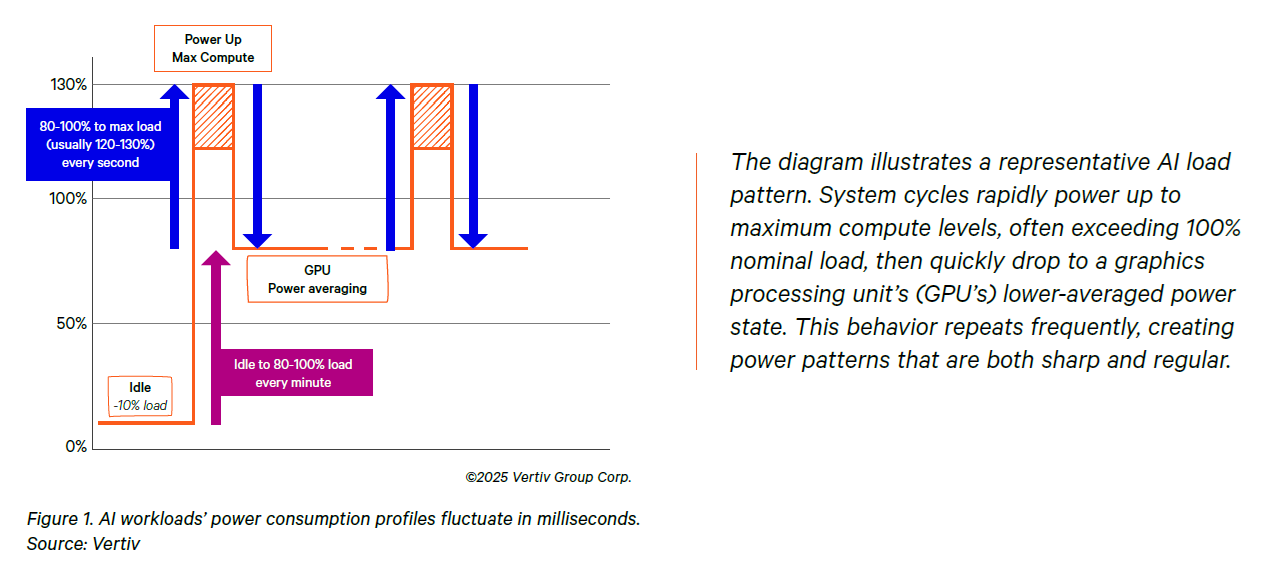
To address this, Vertiv has introduced two advanced control features for uninterruptible power supplies (UPS) designed to actively manage these extreme power variations: Battery Shield and Input Power Smoothing (IPS) . These features work together to ensure stability, protect infrastructure, and preserve backup power integrity.
1. Battery Shield: Protecting Backup Reserves
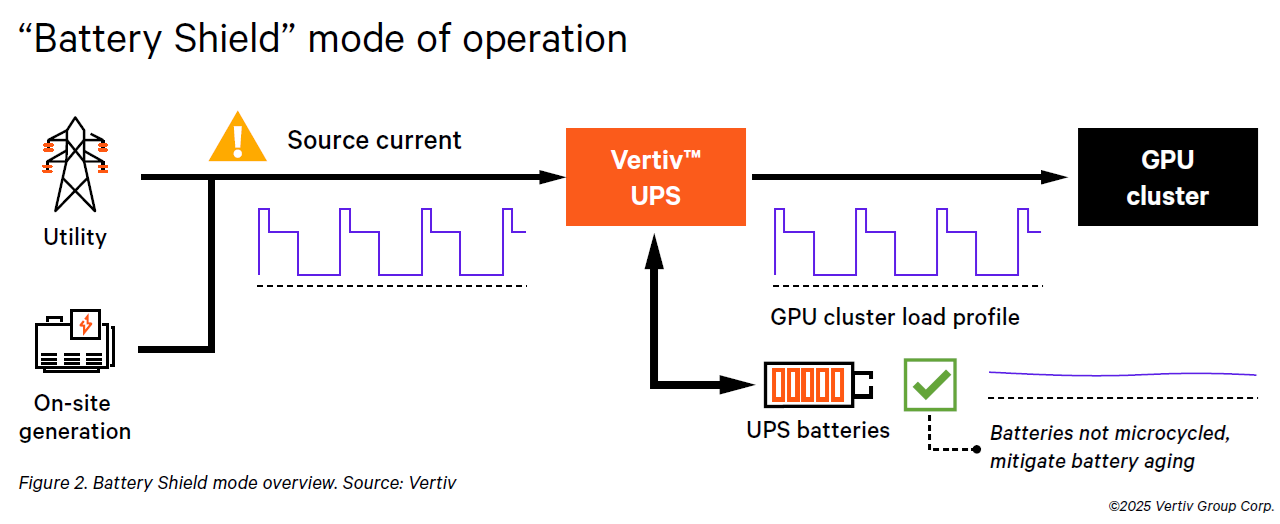
The impulsive nature of AI workloads can cause a UPS to dip into its batteries for minor, millisecond-long power spikes. These frequent "micro-discharges" don't serve a backup purpose but significantly accelerate battery aging and reduce its overall lifespan.
Battery Shield solves this by creating an internal energy buffer within the UPS itself. By dynamically controlling the DC link voltage, the UPS can absorb rapid 0-100% power steps directly, without ever engaging the battery system.
Benefit: This keeps the battery reserved for its primary purpose - a genuine power outage. It extends battery life, reduces maintenance needs, and ensures backup energy is always available when it truly matters.
2. Input Power Smoothing (IPS): Stabilizing the Grid Connection
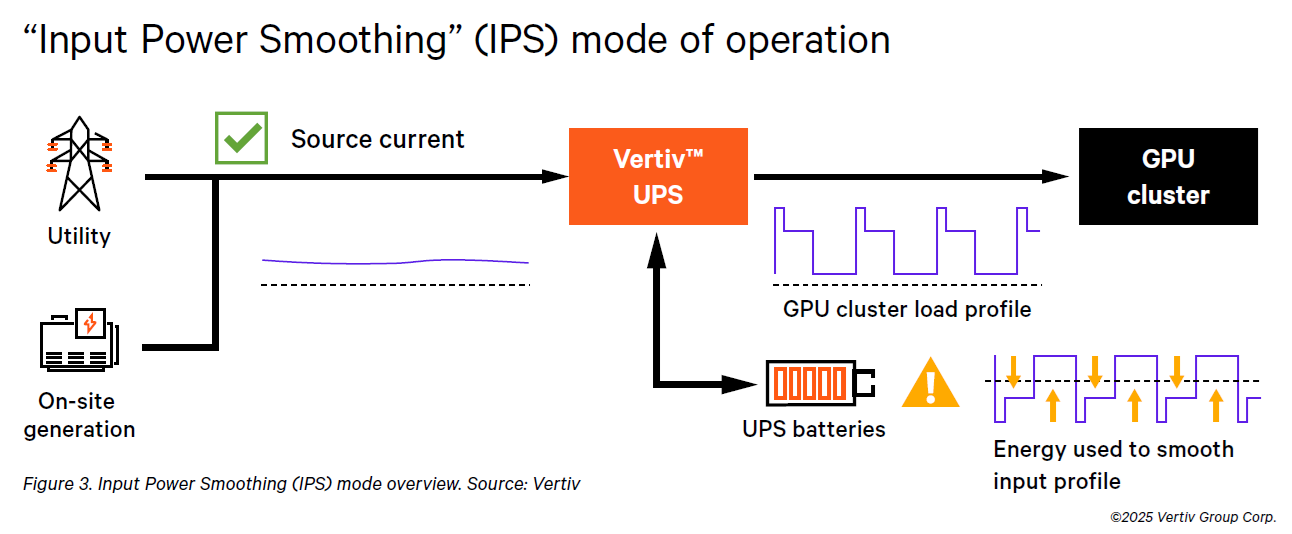
While Battery Shield protects the battery, Input Power Smoothing (IPS) protects everything upstream of the UPS: the switchgear, transformers, generators, and the utility grid itself. Instead of passing the violent power spikes of an AI load directly to the grid, the UPS uses the battery as an active power buffer.
How it Works: The IPS algorithm continuously calculates the average output power. It then dynamically charges or discharges the battery to absorb or fill in the gaps of the real-time power demand. This means the input side of the UPS sees a stable, smoothed power draw, while the battery handles the fast fluctuations on the output side.
Configurable Smoothing: Operators can set a target fluctuation range (FR%), balancing the level of grid stability against battery usage. A higher smoothing level provides maximum protection for upstream gear but increases battery cycling.
Generator Stability: This feature is critical for sites relying on on-site generators, which are highly sensitive to rapid load changes. IPS prevents sudden power swings that could cause generator instability or failure.
Key Considerations for Implementation
The white paper from Vertiv emphasizes that the effectiveness of these features depends on proper system design:
Battery Sizing: To achieve 100% power smoothing indefinitely, the battery system must be sized with sufficient capacity and a high charge rate (C-rate) to reach an equilibrium between charging and discharging. An undersized battery bank will only provide partial, short-term smoothing.
High C-Rate is Crucial: For sites with on-site generation, batteries with a high charging current capability (like Lithium-ion) are essential. They can rapidly recharge during the brief lulls between power spikes, ensuring they are always ready for the next surge.
Coordinated Use: Battery Shield and IPS are complementary. Battery Shield can be the default mode for normal grid operation, while IPS can be activated during generator use to protect the sensitive generation equipment from the AI load.
Conclusion
As AI workloads become the norm, traditional power protection strategies are no longer sufficient. Advanced controls like Battery Shield and Input Power Smoothing transform the UPS from a passive backup device into an active power management system. By intelligently managing the interaction between the load, the battery, and the grid, these features ensure stability, protect critical infrastructure, and maximize the reliability and lifespan of the entire power train.
For more insights, visit Vertiv's AI Hub.