
How Distributed Batteries Amplify Critical Power Resilience
In the high-stakes world of data centre operations, a single point of failure is one too many. This is where the seamless integration of distributed batteries with modern, modular UPS systems fundamentally rewrites the playbook for fault tolerance and availability.
Unlike traditional centralised banks, a distributed battery architecture decentralises energy storage, aligning perfectly with modular UPS design. This synergy is a game-changer for resilience. In a critical event, such as a short circuit, the impact is intelligently contained. Only the battery group on the affected circuit is isolated, while the BCB (Battery Circuit Breaker) ensures the load continues to be supported at full capacity by the remaining, unaffected modules.
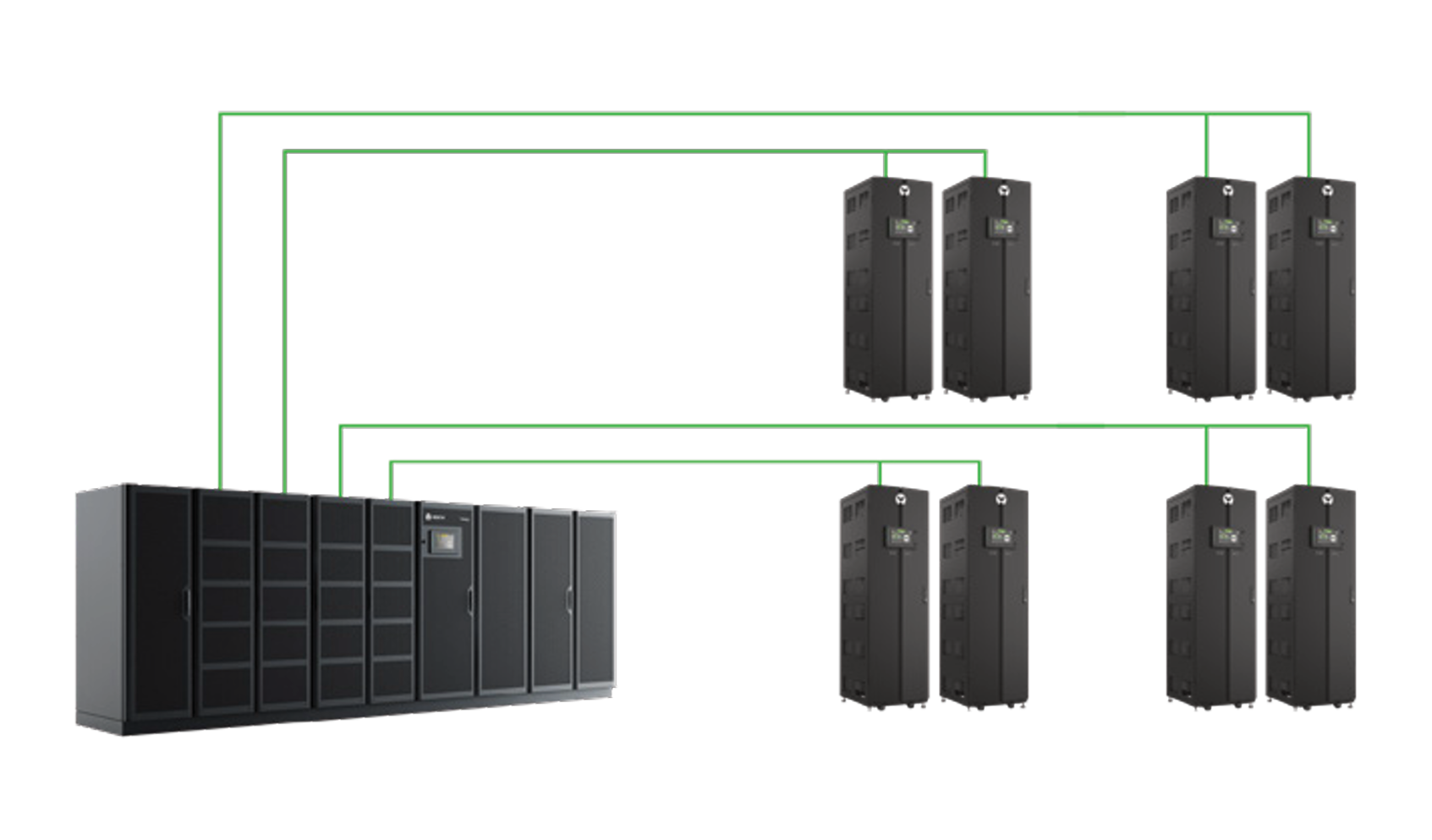
Distributed Battery Architecture
The result is amplification of system performance. This approach enhances fault tolerance by limiting failure propagation and revolutionises serviceability. Moreover, targeted maintenance can be performed on individual battery subsystems without ever compromising the critical load. It transforms potential downtime into a seamless, managed event.
Build smarter, more resilient power infrastructures that maximise uninterrupted operations, ensuring that your data centre is always “uptime”. This is the new standard for ensuring continuous uptime in an always-on world.
To read more, visit Vertiv’s White Paper: Enhancing UPS Reliability With the Advantages of Distributed Battery Systems.