
Beyond the Headlines: Why the Iran War Makes Operational Sustainability a Strategic Imperative
The recent escalation of conflict in the Middle East has sent shockwaves through global energy markets. For Australian businesses, this is not just a geopolitical issue; it is a direct threat to operational stability. Energy price volatility, potential supply chain disruptions, and heightened scrutiny of energy security are now tangible risks that critical infrastructure operators must confront.
In this environment, resilience depends on more than reactive measures. It requires a deeply embedded discipline: operational sustainability.
By revisiting the Uptime Institute’s foundational 2014 Operational Sustainability framework and contextualising it with their recent 2025 insights, organisations can chart a clear path forward—one that balances efficiency, reliability, and long‑term viability.
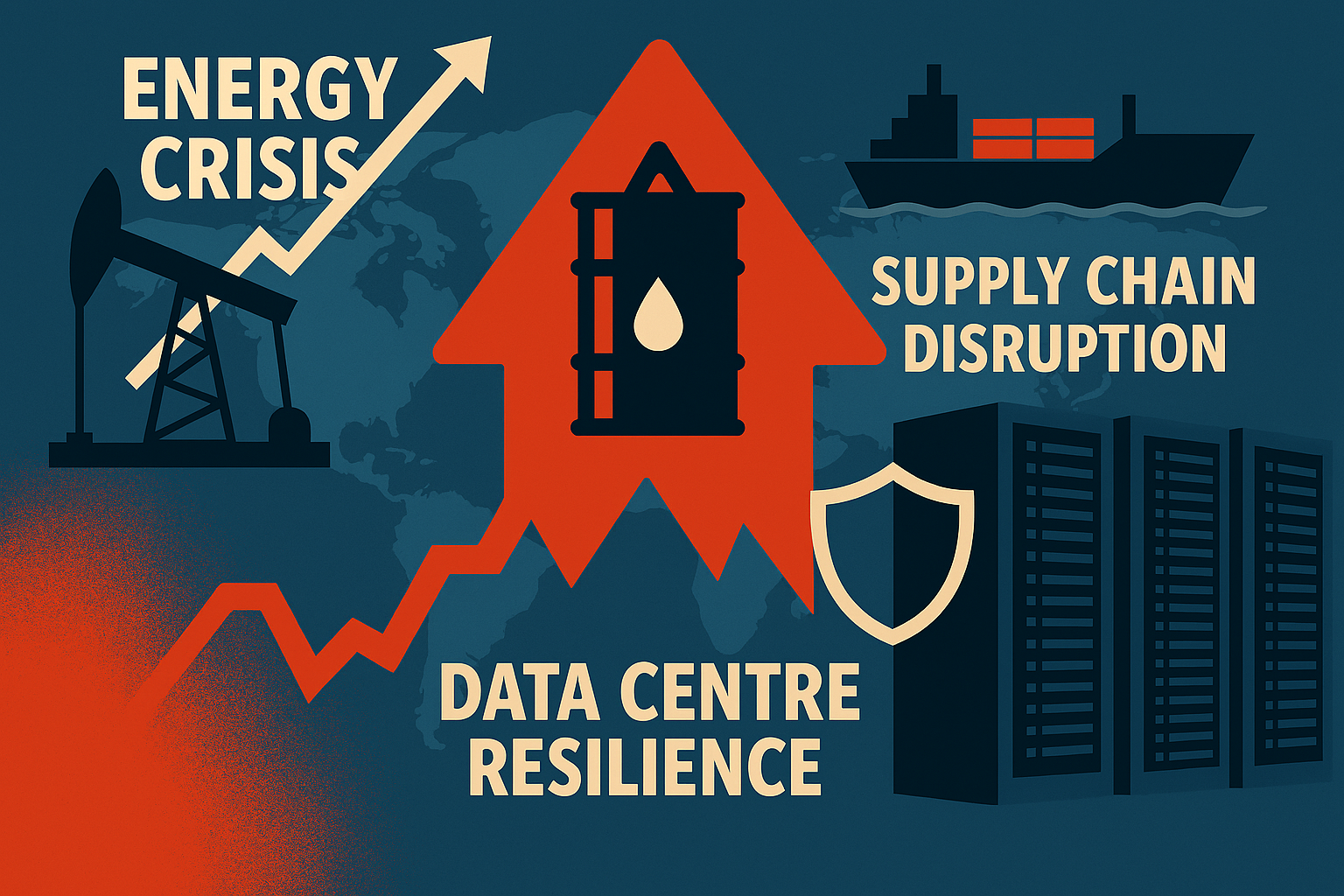
The Middle East conflict has reintroduced a potent variable: the geopolitical risk premium on energy.
The New Context: Energy Crisis as a Catalyst
The Iran‑related conflict has reintroduced a potent variable: the geopolitical risk premium on energy. Australia may be a net energy exporter, but global price spikes for oil and gas directly affect operational costs, while pressure on electricity grids - already strained by the transition to renewables - intensifies.
A key lesson has re‑emerged: energy efficiency is no longer just an environmental goal; it is a prerequisite for operational survival. Facilities heavily dependent on grid power without on‑site fuel diversity, or those operating with outdated, inefficient cooling systems, now face heightened exposure.
Two Sides of a Sustainability Strategy: Insights from 2025
A recent article in the Uptime Institute Journal, “The Two Sides of a Sustainability Strategy” (August 2025), offers a valuable framework for navigating this volatility. The authors distinguish two complementary but distinct approaches:
Facility and IT Sustainability - maximising operational efficiency to minimise energy, water, and carbon footprints. This focuses on extracting the maximum work from every watt of power.
Ecosystem Sustainability – offsetting impacts through carbon credits, water replenishment, and broader environmental initiatives. While valuable, these actions do not alter a facility’s direct operational profile.
The Uptime Institute’s guidance is clear: in times of uncertainty, primary focus should be on Facility and IT Sustainability. As the article states, “Operators should prioritise IT and facilities sustainability over ecosystem sustainability. The execution and results… directly minimise the environmental footprint… while maximising its business and sustainability performance.”
In the context of energy market disruptions, relying solely on ecosystem offsets (such as renewable energy certificates) does little to protect against a 40% (and rising) spike in diesel prices or grid instability. Conversely, a facility that has optimised its Power Usage Effectiveness (PUE), modernised its cooling systems, and invested in on‑site fuel flexibility is inherently more resilient.
Connecting to the 2014 Foundation: The Human Element
Achieving such facility efficiency does not happen in isolation. It requires the human and procedural discipline outlined in the Uptime Institute’s 2014 Operational Sustainability framework - a standard that remains central to critical facility management. That framework rests on three pillars:
Management & Operations - clear policies, procedures, and a culture that prioritises risk management and efficiency.
Staffing - teams that are not only present but trained, competent, and empowered to balance efficiency with resilience.
Programs - robust training, maintenance, and continuous improvement initiatives.
When the 2025 strategy is viewed through the 2014 framework, a coherent picture emerges:
The 2025 strategy defines what to focus on (maximising IT and facility efficiency, reducing dependence on volatile energy sources).
The 2014 operational sustainability framework provides the how (disciplined management, skilled staff, and rigorous programs).
A facility cannot achieve best‑in‑class PUE or implement fuel‑flexible standby power without a highly trained, procedurally disciplined team. In an energy crisis, procedural discipline in fuel management and contingency planning becomes as valuable as the hardware itself.
Implications for Australian Operators
For Australian organisations operating critical environments, the convergence of energy market pressures and evolving sustainability expectations calls for a re‑evaluation of priorities.
Prioritise Operational Efficiency (the “Facility” Side)
Focus on fundamentals: audit energy and water usage. Track metrics such as PUE, Water Usage Effectiveness (WUE), and IT utilisation. In a high‑energy‑cost environment, efficiency improvements directly bolster financial resilience.Invest in Fuel Flexibility and Security
As the 2025 Uptime article notes, standby power systems should be designed with “fuel flexibility (able to use low‑carbon or carbon‑free fuels) and provide primary power capability.” The ability to switch between grid power, diesel, natural gas, or emerging alternatives is a strategic hedge against price volatility and supply uncertainty.Strengthen Operational Sustainability Programs
Review existing management, staffing, and maintenance programs. Are they equipped to handle the stress of prolonged energy price volatility? Are training and change management processes robust enough to prevent downtime during periods of heightened risk?Use Data to Drive Decisions
Leverage infrastructure management software to monitor and optimise workload placement. Maximising the “average work delivered per watt of installed capacity” - a core sustainability element - can mean the difference between absorbing cost increases or being forced to pass them on to customers.
Conclusion
The current energy crisis is a reminder that global energy markets remain fragile. For Australian businesses, the most effective safeguard against this volatility is not a portfolio of carbon offsets, but a deeply embedded culture of operational sustainability.
By uniting the strategic focus of the 2025 Uptime Institute insights - prioritising facility efficiency - with the procedural rigor of the 2014 Operational Sustainability framework, organisations can build facilities that are environmentally responsible, economically resilient, and operationally reliable, regardless of external shocks.
Further Learning: Accredited Operations Specialist (AOS) Course
For those looking to deepen their expertise in operational sustainability, we are hosting an Uptime Institute Accredited Operations Specialist (AOS) Masterclass in Perth, 22 - 26 June 2026. The course provides an intensive, 4.5‑day curriculum covering operational sustainability, risk management, staffing, maintenance, and procedures - directly aligned with the frameworks discussed in this article. Participants receive Uptime Institute accreditation upon successful completion.
More details are available here.